







Experts from NIMHANS, GCRI and BBCI Discuss Intracranial Tumours, Neuropathology and Modern Diagnostic Techniques at NEDFi Convention Centre
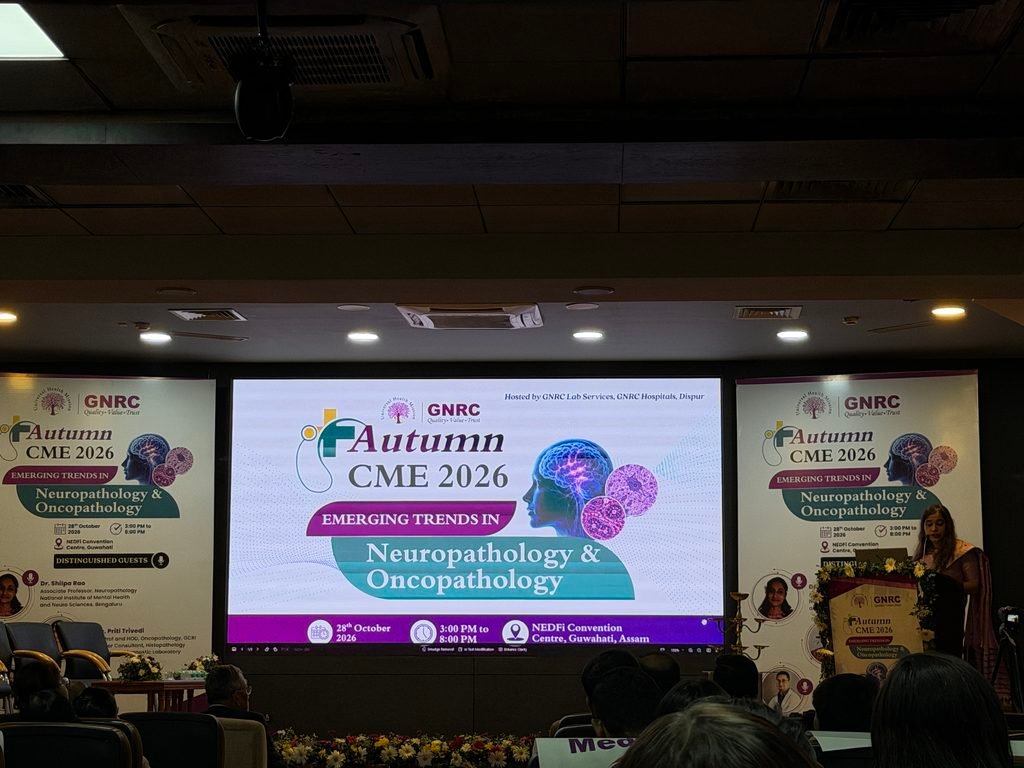
Guwahati, October 28, 2026: Bringing together leading medical experts to discuss advances in cancer diagnosis and specialised pathological investigations, GNRC Hospitals‘ Lab Services successfully organised a Continuing Medical Education (CME) programme at NEDFi Convention Centre, Guwahati. The academic event focused on the complexities of diagnosing intracranial tumours, advanced pathological investigations, molecular profiling and emerging approaches to personalised cancer treatment.
Organised by the GNRC Hospitals, Dispur branch, the CME witnessed participation from specialists representing some of the country’s prominent medical and research institutions, including the National Institute of Mental Health and Neurosciences (NIMHANS), Bengaluru, Gujarat Cancer and Research Institute (GCRI), and Dr. B. Borooah Cancer Institute (BBCI), Guwahati.
The programme provided a platform for radiologists, neurologists, pathologists, oncologists and other medical professionals to exchange scientific knowledge and discuss the evolving role of advanced diagnostic technologies in identifying and managing complex tumours.
Advancing the Diagnosis of Intracranial Tumours
A major focus of the CME was the growing complexity involved in diagnosing tumours affecting the brain and other structures within the skull. Intracranial tumours often present significant diagnostic challenges because of their varied clinical manifestations, overlapping imaging characteristics and diverse pathological features.
The discussions highlighted the importance of combining radiological findings with detailed pathological evaluation to establish accurate diagnoses and guide appropriate treatment decisions.
Experts also discussed the growing relevance of molecular profiling and advanced diagnostic methods, including Next Generation Sequencing (NGS), in understanding tumour characteristics and supporting more targeted treatment strategies.
The programme emphasised that accurate diagnosis requires close coordination between different medical specialities, particularly when dealing with complex brain tumours that demand specialised clinical assessment and treatment planning.
Scientific Session Explores Diagnostic Challenges in Brain Tumours
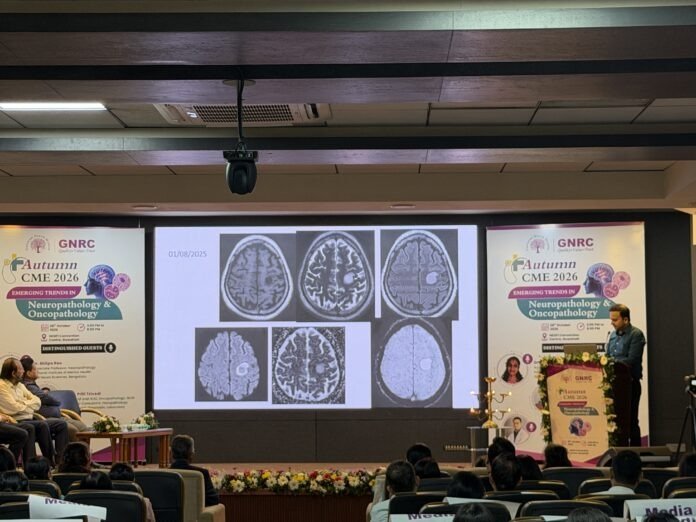
The first scientific session focused on the theme “Diagnostic Dilemmas in Intracranial Tumour”, presented by Dr. Mohammad Hanif Laskar, Consultant in the Medical Radiology Department at GNRC Hospitals, Guwahati.
His presentation addressed the challenges associated with identifying intracranial tumours and interpreting radiological findings in complex cases. The session explored how imaging plays an important role in distinguishing different types of brain tumours and evaluating other intracranial abnormalities.
The discussion also highlighted the difficulties that medical professionals may encounter while interpreting tumour characteristics and determining the most appropriate diagnostic pathway.
By examining the relationship between imaging findings and clinical presentation, the session offered insights into the role of radiology in supporting accurate diagnosis and subsequent treatment decisions.
NIMHANS Expert Discusses Adult-Type Gliomas
Another important scientific presentation was delivered by Dr. Shilpa Barve, Associate Professor in the Department of Neuropathology at the National Institute of Mental Health and Neurosciences (NIMHANS), Bengaluru.
Her presentation focused on “Adult-Type Gliomas”, an important category of tumours originating in the brain’s glial tissue.
The session discussed the classification and neuropathological evaluation of these tumours, highlighting the importance of specialised investigations in understanding their biological characteristics.
The presentation also provided insights into the evolving approaches to tumour classification and the role of neuropathological assessment in supporting clinical decision-making.
With advancements in cancer diagnostics increasingly relying on molecular and pathological information, such discussions are particularly relevant for specialists involved in the management of neurological and oncological conditions.
GCRI Specialist Highlights Gastrointestinal Neuroendocrine Tumours
The CME also featured a presentation on “GI Neuroendocrine Tumour” by Dr. Priti Trivedi, former Assistant Professor in the Department of Pathology at Gujarat Cancer and Research Institute (GCRI) and Senior Consultant, Histopathology Specialist at Accupath Diagnostic Laboratory.
Her session explored important aspects of gastrointestinal neuroendocrine tumours, including their pathological characteristics and the diagnostic considerations involved in identifying these relatively specialised tumour types.
The presentation highlighted the importance of detailed histopathological evaluation in establishing an accurate diagnosis and understanding the nature of neuroendocrine tumours.
The discussion further broadened the scope of the CME beyond neurological tumours, bringing attention to the importance of specialised pathology in the diagnosis and management of cancers affecting different organ systems.
BBCI Professor Discusses the Oncosurgeon’s Perspective
Adding a clinical and surgical dimension to the scientific programme, Dr. Gaurav Das, Professor in the Department of Surgical Oncology at Dr. B. Borooah Cancer Institute (BBCI), Guwahati, delivered a presentation titled “Clinicopathological Correlation from an Oncosurgeon’s Perspective.”
His presentation focused on the relationship between pathological investigation results and the clinical characteristics of patients.
The session discussed how surgeons and other treating specialists use pathological findings alongside clinical observations to develop appropriate treatment plans.
The importance of integrating diagnostic reports with patient symptoms, clinical history and other relevant findings was highlighted as a key component of effective cancer management.
The presentation also reinforced the need for collaboration between pathologists, radiologists and surgical oncologists to ensure that diagnostic conclusions translate into appropriate clinical decisions.
GNRC Lab Services Strengthens Diagnostic Capabilities
During the programme, Dr. Shabnam Akhtar Ahmed, Chief Consultant of GNRC Lab Services, Dispur, highlighted the laboratory’s diagnostic capabilities and its contribution to specialised pathological investigations.
She stated that GNRC Lab Services has been serving patients since 2012 and operates a laboratory accredited by the National Accreditation Board for Testing and Calibration Laboratories (NABL).
She also highlighted the establishment of an Immunohistochemistry (IHC) laboratory approximately three years ago, strengthening the laboratory’s ability to undertake specialised investigations.
Immunohistochemistry is an important diagnostic technique that uses specific antibodies to identify cellular markers in tissue samples. It plays a significant role in tumour classification and helps pathologists distinguish between different types of cancers.
The laboratory currently undertakes investigations involving markers associated with Central Nervous System (CNS) tumours, along with several other routine and specialised tumour markers.
Experienced Pathologists and Specialised Investigations
The programme also highlighted the contribution of experienced pathology professionals associated with GNRC Lab Services.
The laboratory’s diagnostic team includes Dr. Shabnam Akhtar Ahmed and Dr. Bibhuti Kumar Saikia, both experienced pathologists with more than 15 years of professional experience, along with Dr. Neha Kakoti, a DM-qualified Oncopathologist.
Their expertise supports the evaluation of complex pathological samples and the interpretation of specialised investigations required for cancer diagnosis.
The availability of advanced laboratory facilities, experienced pathologists and specialised diagnostic techniques plays an important role in supporting clinicians as they determine the nature and characteristics of tumours.
Multidisciplinary Collaboration at the Centre of Cancer Diagnosis
A key takeaway from the CME was the importance of multidisciplinary collaboration in diagnosing and treating complex tumours.
Modern cancer management increasingly depends on the combined expertise of radiologists, pathologists, neurologists, neurosurgeons, oncologists and other medical specialists.
While radiological investigations help identify and assess suspicious lesions, pathological examination provides essential information about the nature of the tumour. Molecular profiling and advanced diagnostic technologies can further support tumour classification and treatment planning.
The scientific discussions emphasised that bringing these different areas of expertise together can improve diagnostic accuracy and help clinicians make more informed decisions.
The event also encouraged knowledge exchange among specialists, helping medical professionals remain updated on emerging diagnostic technologies and evolving approaches to cancer care.
Strengthening Medical Education and Diagnostic Excellence in Northeast India
The CME organised by GNRC Hospitals’ Lab Services reflects the growing importance of continuing medical education in strengthening healthcare delivery across Assam and the Northeast.
As diagnostic technologies continue to evolve, regular academic interactions provide healthcare professionals with opportunities to understand new developments, exchange clinical experiences and discuss complex medical cases.
By bringing together experts from institutions such as NIMHANS, GCRI and BBCI, the programme created an opportunity for meaningful professional engagement and interdisciplinary learning within the region.
The discussions also highlighted the increasing role of specialised laboratory services in supporting advanced medical care, particularly in areas such as cancer diagnosis, neuropathology and molecular investigations.
A Platform for Knowledge Exchange and Better Patient Care
The successful conclusion of the CME marked another step towards encouraging scientific collaboration and strengthening diagnostic expertise among medical professionals.
Through presentations covering intracranial tumours, adult-type gliomas, gastrointestinal neuroendocrine tumours and clinicopathological correlation, the programme addressed several important aspects of contemporary cancer diagnosis.
The event reinforced the importance of accurate pathological evaluation, advanced diagnostic technologies and coordinated clinical decision-making in developing appropriate treatment strategies.
By creating a platform for specialists to exchange knowledge and discuss emerging developments, GNRC Hospitals’ Lab Services reaffirmed its commitment to supporting diagnostic excellence and strengthening collaborative healthcare practices in Assam and the wider Northeast.
READ MORE: GNRC Medical Organises World Heart Day Walkathon in North Guwahati to Promote Heart Health