





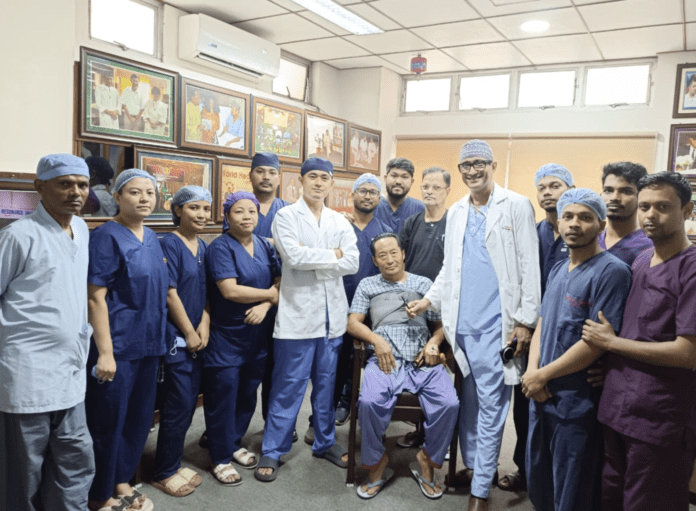


42 Year Old Patient Survives 13 Hour Journey from Thimphu to Guwahati with Arrow Lodged in Heart
In an extraordinary medical case, a 42 year old Bhutanese man, referred to as Tashi Dorji (name changed to protect privacy), has survived a rare and potentially fatal penetrating cardiac injury after a steel arrow pierced his chest and became lodged in the right ventricle of his heart.
The patient was successfully treated at GNRC Hospitals, Dispur, following a challenging 13 hour road journey from Thimphu to Guwahati. The complex cardiac surgery was performed by a specialised team led by Dr Rajnish Duara, Director and Chief Cardiac Surgeon, GNRC, with assistance from Dr Aadarsha Rai, Consultant Cardiac Surgeon.
The case represents an exceptionally rare instance of a patient surviving a penetrating injury to the heart and travelling several hundred kilometres with the foreign object still lodged inside the organ.
Arrow Injury Occurred During Archery Match in Bhutan
According to the treating team, the patient sustained the injury during a friendly archery match in Paro, Bhutan. A hard steel arrow struck the front of his chest, penetrated the breastbone, and entered the heart before becoming lodged in the right ventricle.
Penetrating injuries involving the heart are extremely uncommon and can result in rapid and life threatening blood loss. The presence of a foreign object inside the heart also presents significant challenges because any uncontrolled movement or premature removal can potentially cause catastrophic bleeding.
Following the accident, the patient was initially shifted to Thimphu for emergency medical evaluation.
A CT scan conducted there revealed the extent of the injury and confirmed that the arrow had penetrated the right ventricle. Given the complexity of the case, doctors in Thimphu immediately contacted GNRC Hospitals in Guwahati for specialised cardiac surgical care.
Emergency Referral Brings Patient to Guwahati
The Bhutanese medical team consulted Dr Rajnish Duara, who agreed to undertake the high risk surgery at GNRC Hospitals, Dispur.
The patient was subsequently transported overnight by road from Thimphu to Guwahati. Remarkably, he completed the approximately 13 hour journey with the arrow still lodged in his heart.
The transfer itself presented a major medical challenge. Any displacement of the arrow during transportation could potentially have resulted in severe internal bleeding and further damage to the heart.
The successful arrival of the patient at GNRC allowed the cardiac surgical team to proceed with definitive treatment under controlled conditions.
Why the Arrow Could Not Simply Be Removed
According to the treating doctors, the arrow could not be pulled out immediately because the removal of the object from the beating heart could have caused massive blood loss and potentially resulted in immediate death.
The surgical team therefore developed a carefully controlled approach to safely remove the arrow while simultaneously managing the patient’s circulation and protecting the injured heart.
The procedure required the use of a heart lung machine, also known as a cardiopulmonary bypass system, to temporarily take over the functions of the patient’s heart and lungs during the critical portion of the operation.
This approach allowed surgeons to create a controlled surgical environment while preparing to remove the arrow and repair the damaged cardiac tissue.
Complex Cardiac Surgery Performed at GNRC
During the procedure, the surgical team accessed the patient’s groin artery and vein to establish cardiopulmonary bypass.
Blood was diverted from the groin vein through the heart lung machine, where it was oxygenated before being returned through the groin artery. This temporarily bypassed the patient’s native heart and lungs, allowing the surgeons to operate under controlled conditions.
The patient’s breastbone was subsequently divided using a surgical saw to provide access to the heart.
At the critical stage of the procedure, the arrow was carefully removed while the patient remained on cardiopulmonary bypass. With the heart emptied but continuing to beat, the surgeons were able to identify and repair the cardiac injury.
Following successful repair of the heart, the patient was gradually disconnected from the heart lung machine.
The complex procedure required meticulous planning because of the unusual trajectory of the arrow and the potentially catastrophic consequences of uncontrolled bleeding.
Patient Shows Remarkable Recovery
The patient’s recovery following the surgery was reported to be encouraging.
He was taken off the ventilator within three hours of the procedure and became mobile from the second postoperative day, indicating a positive early recovery following the high risk cardiac operation.
The rapid postoperative progress was particularly notable given the severity of the initial injury, the long road journey from Bhutan, and the complexity of the surgical intervention.
The successful outcome also demonstrated the importance of timely referral and access to specialised cardiac surgery in managing rare and life threatening injuries.
Dr Rajnish Duara Calls Case a “Rarest of Rare” Situation
Speaking about the case, Dr Rajnish Duara, Director and Chief Cardiac Surgeon at GNRC, described the patient’s survival as extraordinary.
He highlighted the fact that the patient not only survived an arrow injury directly involving the heart but also endured the difficult 13 hour journey from Thimphu to Guwahati before receiving definitive surgical treatment.
Dr Duara said that the unusual nature of the injury required meticulous planning and a carefully controlled surgical approach. The successful outcome, he noted, was made possible through coordinated medical care and the use of appropriate cardiac surgical techniques.
Support from Bhutanese Authorities
GNRC Hospitals also acknowledged the support provided by personnel of the Embassy of Bhutan during the patient’s treatment journey.
The support extended from facilitating the patient’s transfer to Guwahati to assistance during the period following the surgery. Such coordination was important in ensuring continuity of care during an emergency involving a critically injured international patient.
The case also highlights the longstanding healthcare relationship between Bhutan and Assam, with patients from Bhutan frequently travelling to Guwahati to access specialised medical services.
Guwahati’s geographic proximity and growing network of super speciality hospitals have made the city an important healthcare destination for patients from neighbouring regions and countries.
Patient Plans to Continue Archery
In an unusual and light hearted moment following his recovery, the patient was reportedly asked what he intended to do after recovering from the extraordinary incident.
Tashi Dorji smiled and said that he would continue archery as a pastime.
His response added a remarkable human element to an otherwise highly serious medical case and reflected his determination to return to normal life following the life threatening accident.
GNRC’s Role in Advanced Cardiac Care
The successful treatment of this rare penetrating cardiac injury adds to the growing profile of GNRC Hospitals as a provider of specialised medical care in Northeast India.
The hospital group provides multi speciality healthcare services with a focus on quality, value, and trust. Its cardiac care services cater to patients requiring complex surgical and medical interventions from Assam and other parts of the Northeast.
Cases involving traumatic injuries to the heart require highly specialised infrastructure, experienced cardiac surgeons, anaesthesia teams, critical care support, and advanced cardiopulmonary bypass facilities.
The successful management of the Bhutanese patient’s injury demonstrates the importance of having such specialised capabilities available within the region.
A Rare Medical Case Highlights Importance of Specialised Care
Penetrating cardiac injuries remain among the most challenging emergencies encountered in trauma and cardiac surgery. The risk of rapid blood loss, cardiac tamponade, damage to major vessels, and sudden cardiovascular collapse makes immediate and carefully coordinated treatment essential.
In this case, the combination of an arrow remaining lodged in the heart, the patient’s survival during a prolonged road transfer, and the eventual successful surgical repair made the incident particularly unusual.
The case also demonstrates how specialised referral networks can connect patients from neighbouring countries with advanced medical facilities in Northeast India.
Strengthening Healthcare Ties Between Bhutan and Assam
Beyond its medical significance, the case highlights the growing healthcare links between Bhutan and Assam.
Patients from Bhutan have increasingly accessed specialised healthcare services in Guwahati, benefiting from the city’s expanding medical infrastructure and geographical accessibility.
The successful treatment of this rare cardiac injury further reinforces the role of Guwahati as a regional healthcare destination for super speciality treatment.
A Remarkable Story of Survival
The survival of Tashi Dorji following an arrow injury to the heart is an extraordinary medical story. From the initial accident during an archery match in Paro to emergency assessment in Thimphu, a high risk journey to Guwahati, and complex cardiac surgery at GNRC Hospitals, every stage of the patient’s treatment presented significant challenges.
The successful operation and encouraging recovery highlight the importance of coordinated emergency care, specialised cardiac expertise, advanced medical infrastructure, and careful surgical planning.
The case has also brought renewed attention to the specialised healthcare capabilities available in Northeast India and the important role Guwahati plays in providing advanced medical care to patients from the region and neighbouring countries.
About GNRC Hospitals
GNRC Hospitals is a leading multi speciality hospital group committed to quality, value, and trust in healthcare delivery across Assam and Northeast India, with a presence extending to Barasat, Kolkata. The group provides specialised medical services across multiple disciplines and serves patients from across the region.
READ MORE: AdtU Student Partha Dutta Named Best Swimmer of Assam at State Championship 2026