








For generations, a university degree has been regarded as the passport to a successful career. Parents encouraged their children to pursue higher education with the hope that academic qualifications would naturally lead to stable employment and financial security. However, the employment landscape has changed dramatically over the last decade. Today, employers increasingly seek individuals who can solve problems, think critically, adapt to new technologies, and contribute from the very first day at work.
This shift has created an important question: Are Indian universities preparing students for jobs, or merely preparing them for examinations?
The answer is complex. While India’s higher education system has expanded significantly, industries continue to report a shortage of job-ready graduates. The gap between classroom learning and industry expectations has become one of the biggest challenges facing higher education today.
A Changing World of Work
Technological advancements such as Artificial Intelligence (AI), automation, robotics, cloud computing, and data analytics are transforming every sector of the economy. Jobs that existed a decade ago are disappearing, while entirely new professions are emerging.
According to several industry reports, employers now value practical skills, creativity, teamwork, communication, and digital literacy alongside academic knowledge. As a result, universities are under increasing pressure to redesign their curriculum and teaching methods.
Students can no longer depend solely on textbooks. They need opportunities to experiment, innovate, and learn by doing.
The Growing Importance of Skill-Based Education
Skill-based education emphasizes practical learning rather than rote memorization. It enables students to apply theoretical concepts to real-world challenges through laboratory work, internships, live projects, industry interactions, and entrepreneurship.
In recent years, several educational reforms have highlighted the need for experiential learning. Students are encouraged to participate in innovation competitions, startup programmes, hackathons, research projects, and community-based initiatives that develop both technical and soft skills.
Such experiences not only improve employability but also encourage confidence, leadership, and independent thinking.
Innovation Ecosystems within Universities
Across India, many universities are gradually transforming into centres of innovation. Incubation centres, entrepreneurship cells, research laboratories, and technology innovation hubs are creating environments where students can convert ideas into practical solutions.
Rather than viewing education only as preparation for employment, these institutions encourage students to become innovators, researchers, and entrepreneurs.
Young innovators are developing affordable healthcare technologies, renewable energy solutions, agricultural innovations, artificial intelligence applications, and digital platforms that address local as well as national challenges.
This shift represents a significant change in the purpose of higher education—from producing job seekers to creating job creators.
Artificial Intelligence and the Future of Learning
Artificial Intelligence is rapidly becoming an integral part of education. AI-powered learning platforms provide personalized instruction, automate assessments, generate study materials, and assist students in understanding complex concepts.
However, AI should not replace human learning. Instead, it should complement classroom teaching by allowing students to focus more on creativity, analysis, collaboration, and problem-solving.
Educators also face the responsibility of teaching students how to use AI ethically and responsibly. Understanding the limitations of AI is just as important as understanding its capabilities.
Challenges That Still Exist
Despite encouraging developments, several challenges remain.
Many educational institutions continue to rely heavily on examination-oriented teaching methods. Industry exposure is often limited, particularly in smaller institutions. Faculty development, infrastructure, and curriculum modernization require continuous investment.
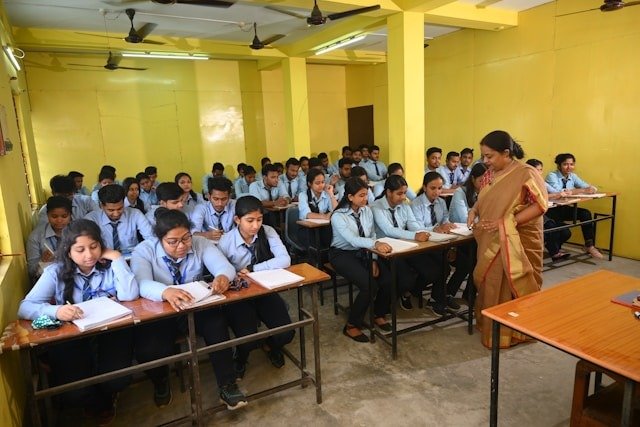
Students from rural and economically disadvantaged backgrounds may also face difficulties in accessing advanced technology and digital learning resources.
Addressing these challenges requires coordinated efforts from universities, industries, policymakers, and society.
The Role of Industry Partnerships
Closer collaboration between universities and industries can significantly reduce the skill gap.
Industry experts can contribute through guest lectures, internships, mentoring programmes, collaborative research, and curriculum design. Such partnerships help students understand workplace expectations while giving employers access to emerging talent.
Successful innovation ecosystems are built upon continuous interaction between academia, industry, government, and society.
Looking Ahead
The future belongs to individuals who can continuously learn, adapt, and innovate. Degrees will continue to hold value, but they will increasingly be accompanied by portfolios of practical work, research experience, technical skills, and entrepreneurial initiatives.
Higher education must therefore evolve beyond conventional classroom instruction and embrace interdisciplinary learning, technological integration, and experiential education.
Success Stories That Reflect the Change
Across India, there are encouraging examples of students and young entrepreneurs who have demonstrated that practical learning can create meaningful opportunities. Many startups that began as classroom projects or college competitions have grown into successful businesses addressing real-world challenges in healthcare, agriculture, education, logistics and financial technology.
Institutions such as the Indian Institutes of Technology (IITs), National Institutes of Technology (NITs), Indian Institutes of Information Technology (IIITs), and several state universities have established incubation centres that support students with mentoring, funding opportunities and industry connections. These initiatives encourage young innovators to transform ideas into products and services that create both economic and social value.
The startup ecosystem in India has also benefited from government initiatives such as Startup India, Digital India and Atal Innovation Mission. These programmes have helped build an environment where innovation is encouraged rather than feared. More importantly, they have shown students that entrepreneurship is becoming a realistic career option rather than an uncertain dream.
However, these success stories should not be viewed as isolated achievements. They demonstrate what becomes possible when education moves beyond theoretical instruction and provides students with opportunities to experiment, collaborate and solve practical problems.
Why Soft Skills Matter More Than Ever
While technical knowledge remains essential, employers increasingly emphasise another set of abilities that cannot always be measured through examinations. Communication, leadership, teamwork, emotional intelligence, adaptability and problem-solving have become equally valuable in today’s workplace.
A software engineer may possess excellent coding skills, but without the ability to explain ideas clearly or work effectively within a multidisciplinary team, long-term career growth becomes difficult. Similarly, an entrepreneur may have an innovative business idea but still struggle if they cannot communicate with investors, customers or employees.
Universities therefore have an important responsibility to develop these human skills alongside academic knowledge. Group projects, presentations, debates, internships, field visits and community engagement programmes help students build confidence while preparing them for professional environments.
The rapid growth of remote work has made these competencies even more important. Professionals today often collaborate with colleagues located in different cities and countries. Effective communication and teamwork have become fundamental requirements in almost every profession.
Bridging the Gap Between Rural and Urban Education
One of the major challenges facing India’s education system is the unequal availability of learning opportunities. Students studying in metropolitan institutions often have greater access to advanced laboratories, industry experts, internships and digital infrastructure compared to those studying in smaller towns or rural regions.
The expansion of digital education has reduced this gap to some extent, but disparities continue to exist. Reliable internet connectivity, access to modern equipment and exposure to industry practices remain uneven across different parts of the country.
Addressing this imbalance requires long-term investment in educational infrastructure, teacher training and digital inclusion. Online learning platforms, virtual laboratories and collaborative projects between institutions can help create more equitable learning opportunities for students regardless of their geographical location.
Equally important is the promotion of local innovation. Every region faces unique challenges related to agriculture, healthcare, transportation, disaster management or environmental sustainability. Encouraging students to work on solutions for local problems not only benefits communities but also develops practical research and entrepreneurial skills.
The Importance of Lifelong Learning
Perhaps the biggest change taking place today is the understanding that education no longer ends with graduation.
In earlier generations, completing a university degree often marked the beginning of a lifelong career in a single profession. Today’s reality is very different. Technological advancements are transforming industries at an unprecedented pace, requiring professionals to continuously update their knowledge and skills.
Learning has therefore become a lifelong process.
Professionals regularly enrol in online certification courses, attend workshops, participate in webinars and pursue specialised training to remain relevant in their respective fields. Universities are also expanding their role by offering executive education, continuing education programmes and flexible learning opportunities for working professionals.
This shift represents an important change in educational philosophy. Instead of preparing students for one specific job, higher education must prepare them for continuous learning throughout their careers.
Building an Innovation Mindset
Innovation is often misunderstood as something that only scientists, engineers or technology companies create. In reality, innovation begins with curiosity.
A teacher experimenting with new classroom methods, a journalist discovering better ways to tell stories, a healthcare worker improving patient services or a farmer adopting sustainable agricultural practices are all examples of innovation.
Educational institutions should therefore focus on developing an innovation mindset rather than merely teaching innovation as a subject.
Students should feel comfortable asking questions, challenging assumptions and exploring multiple solutions to the same problem. Failure should be viewed as an opportunity for learning rather than a reason for discouragement.
Such an environment nurtures creativity, resilience and confidence—qualities that are essential in every profession.
The Way Forward
The future of higher education lies in creating graduates who possess both knowledge and competence. Universities must continue strengthening partnerships with industry, encouraging interdisciplinary learning and integrating technology without losing sight of the human values that define education.
Curricula should be reviewed regularly to reflect changing industry requirements. Faculty members should receive opportunities for continuous professional development, while students should be encouraged to participate in internships, research projects, innovation challenges and entrepreneurial initiatives throughout their academic journey.
Most importantly, education should inspire students to become lifelong learners who are capable of adapting to uncertainty. The world will continue to change, but individuals who combine knowledge with curiosity, ethics, creativity and practical skills will always remain relevant.
Conclusion
India stands at an important moment in its educational journey. As technology reshapes industries and careers, universities must move beyond traditional teaching models and prepare students for an uncertain but exciting future.
The true purpose of education is not merely to award degrees but to empower individuals to think independently, solve real problems, and contribute meaningfully to society. Institutions that successfully combine academic excellence with practical innovation will play a decisive role in shaping the next generation of leaders, researchers, entrepreneurs, and responsible citizens.
A degree may open the first door, but it is skill, curiosity, adaptability, and innovation that ultimately determine how far an individual will go.
READ MORE: Five Assam down town University Scientists Among World’s Top 5% Researchers in SciRank 2025