







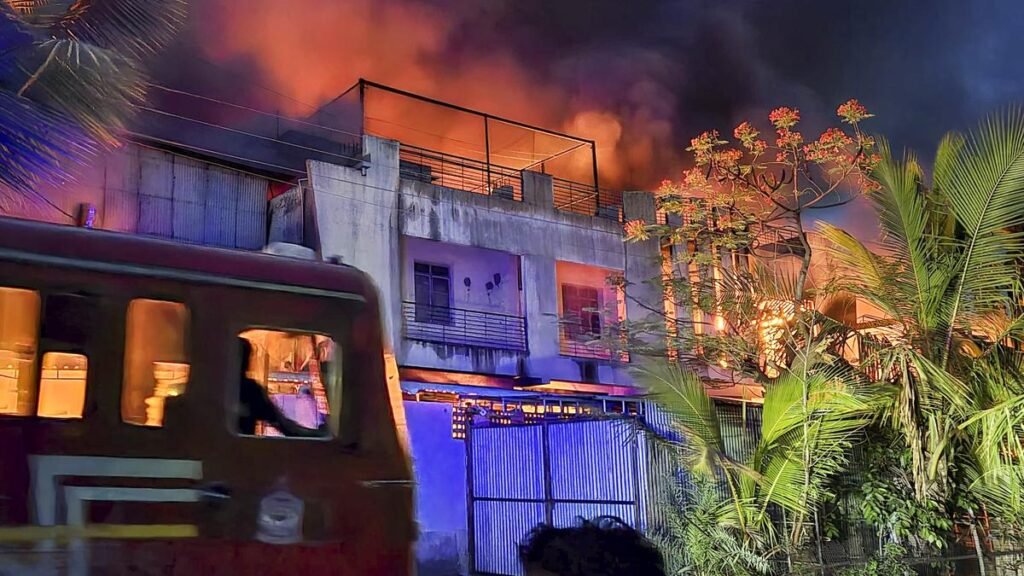
Tragedy in Solapur: An early-morning fire ripped through a textile factory in MIDC area of Solapur , claiming the lives of eight people, including the 87-year-old owner and his 18-month-old grandson. Families of the victims have sharply criticized the fire department’s delayed response and lack of adequate gear—pointing to preventable failures that could have saved lives.
Fire Claims Lives Across Two Families
The fire erupted before dawn at the Central Textile Mills, where both the owner’s family and a worker’s family lived onsite. Combustible materials like synthetic fabric and garment stock fueled the ferocious blaze. Despite early alarms, the inferno raged on for hours. Meanwhile, the frantic pleas of trapped individuals—heard over phone calls—went unanswered for too long.
Relatives report that the fire brigade’s response was underwhelming. Only one fire tender initially arrived, and it lacked critical gear such as protective clothing and oxygen cylinders. The main water hoses were too small and low-pressure, rendering suppression efforts ineffective. In desperation, family members arranged for private water tankers to aid the rescue operation.
Fire Brigade Chief Defends Efforts Amid Accusations
Fire Chief Rakesh Salunkhe, seriously injured during the operation, defended his team’s efforts. He recounted risking his life to rescue victims, stating that just two more minutes inside would have cost them their lives. Salunkhe said they pushed into the building amid extreme heat and collapsed structures, retrieving three victims initially. He emphasized that available resources were fully utilized—but noted that operational capacity would improve with better equipment.
Calls for Accountability and Infrastructure Upgrades
Former legislator Narasayya Adam and grieving relatives have demanded an independent inquiry into the tragedy. They accuse authorities of failing in their duty to protect lives, citing systemic neglect in fire preparedness.
Municipal officials have responded with pledges to improve safety infrastructure. Plans include upgrading the fire department’s gear, establishing a new fire station near the hazardous industrial zone, and conducting safety audits across other older MIDC precincts.
Relief Measures and Community Mourning
National leaders have expressed condolences and offered financial relief. Prime Minister Modi has allocated ₹2 lakh to each bereaved family and ₹50,000 to the injured, while Maharashtra’s Chief Minister announced ₹5 lakh per family. The community mourns deeply, with funerals held amid an atmosphere of outrage and grief.
Why This Incident Became a Flashpoint
This tragedy lays bare the dangers of ignoring fire safety norms in industrial zones. It underscores two alarming truths: one, that lives were lost due to equipment and response failures; and two, that non-compliant construction and outdated clearances can cost lives. The incident highlights the fragile line between disaster and preventability.
To restore public confidence and prevent future tragedies, authorities must act swiftly:
- Conduct a transparent, independent probe into the fire department’s response and the factory’s compliance.
- Fast-track fire safety upgrades—equip brigades properly, establish new stations, and mandate regular audits.
- Enforce building regulations to eliminate illegal residential zones in industrial premises.
- Engage the community, both to reassure and to ensure safety protocols are understood and adhered to across Solapur’s industrial belt.
The hope now rests on systemic change—transforming this tragedy into a catalyst for lasting fire safety reforms.
ALSO READ: Holi 2025: Auspicious Date, Muhurat, Rituals & Significance of the Festival