







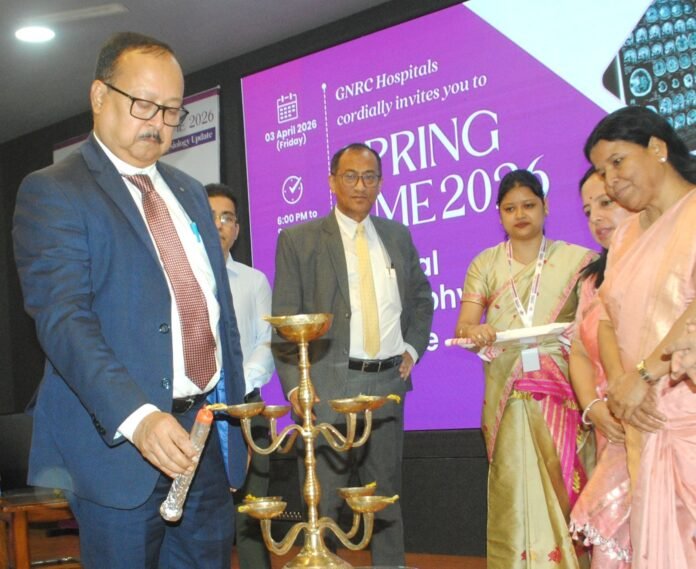



GNRC Hospitals successfully conducted its Spring CME 2026: Advancing Clinical Neurophysiology Update at the NEDFi Convention Centre, bringing together some of the most eminent neurologists and medical professionals from across the country.
Organised by the Department of Neuroscience, GNRC Medical, North Guwahati, the Continuing Medical Education (CME) programme served as a vital academic platform focused on the growing importance of clinical neurophysiology in diagnosing and managing neurological disorders. The event witnessed participation from neurologists, neurosurgeons, physicians, and healthcare professionals from across Northeast India, reflecting the region’s increasing engagement with advanced neurological sciences.
A Legacy of Neurological Excellence in Northeast India
The programme was held under the aegis of GNRC Hospitals, an institution that has played a pioneering role in neurological care in Northeast India for nearly four decades. The event also recognised the contributions of Nomal Chandra Borah, Founder of GNRC Universal Health Mission and GNRC Group of Hospitals, who served as the Chief Patron.
Dr. Borah’s association with clinical neurophysiology dates back over 40 years, when GNRC introduced its first EEG facility—marking a significant milestone in neurological diagnostics in the region. His vision laid the foundation for advanced neurological care in Assam, ensuring that patients in the Northeast had access to cutting-edge diagnostic technologies.
Spring CME 2026 was seen as a continuation of that legacy, aiming to strengthen clinical knowledge and improve healthcare outcomes through academic engagement.
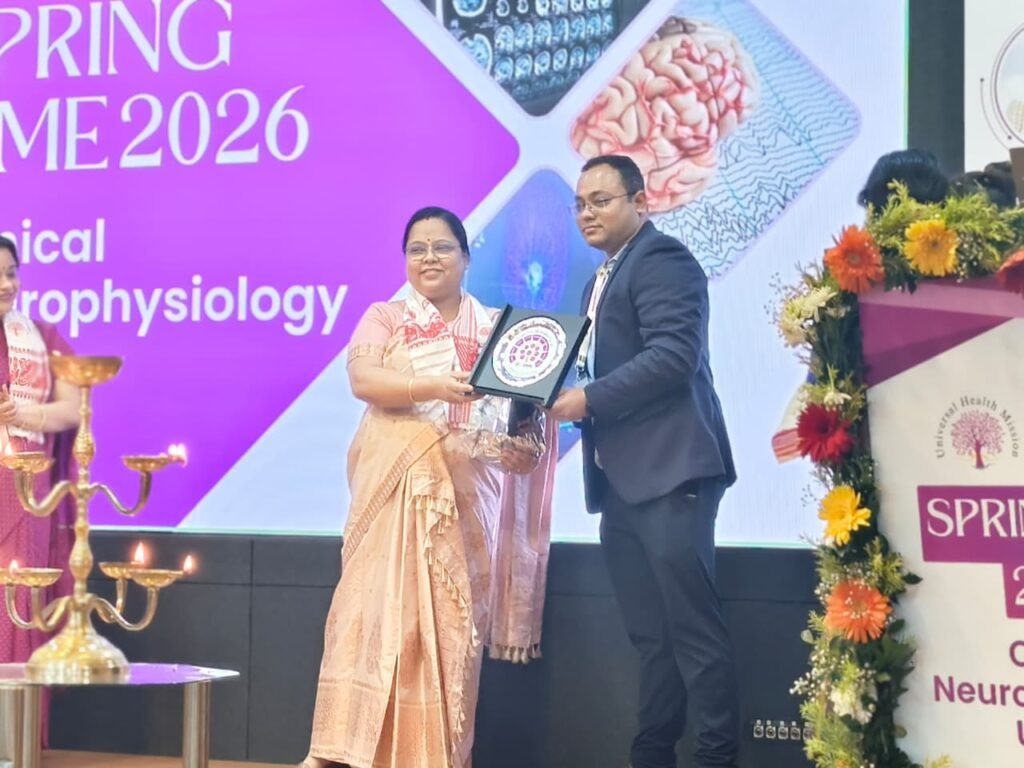
Chief Guest Highlights Importance of Medical Education
The event was graced by Manoj Kumar Choudhury, Director of Medical Education, Assam, who attended as the Chief Guest. His presence reinforced the importance of continuous medical education in enhancing the quality of healthcare delivery.
He emphasized that programmes like these play a crucial role in keeping healthcare professionals updated with the latest advancements in medical science, particularly in specialized fields such as neurology. Such initiatives contribute significantly to improving diagnostic accuracy and patient care standards across the state.
High-Impact Academic Sessions by National Experts
The CME featured two highly engaging academic sessions delivered by leading neurologists from premier medical institutions in India.
The first session was presented by Jayantee Kalita from the Department of Neurology at Sanjay Gandhi Post Graduate Institute of Medical Sciences (SGPGI), Lucknow. Her talk focused on the clinical application of neurophysiological tests such as EEG, NCV, EMG, and evoked potential studies.
She provided a comprehensive framework to help clinicians determine when and where these diagnostic tools should be used effectively in managing neurological conditions. Her evidence-based approach offered valuable guidance for improving diagnostic precision and treatment planning.
The second session was delivered by Manjari Tripathi from the Department of Neurology at All India Institute of Medical Sciences (AIIMS), New Delhi. Her presentation focused on EEG in epilepsy management, including advanced techniques such as Stereo EEG and Magnetoencephalography (MEG).
Dr. Tripathi’s session highlighted the evolving landscape of epilepsy diagnosis and treatment, offering insights into how advanced neurophysiological tools are transforming patient care.
Strong Organising Leadership from GNRC Experts
The event was steered by a distinguished organising committee comprising leading experts from within the GNRC ecosystem.
Navanil Barua, Director of Neurosurgery at GNRC Hospitals, Dispur, served as the President of the Organising Committee. His leadership ensured the academic quality and clinical relevance of the programme.
The role of Organising Secretary was jointly handled by Mausumi Barthakur, Consultant in Neurophysiology at GNRC Medical, North Guwahati, and Amit Ranjan Barua, Consultant in Neurology at the same institution. Their efforts were instrumental in conceptualising and executing the CME, bringing together nationally renowned faculty and ensuring a high-impact learning experience.
Bridging Knowledge Gaps in Neurophysiology
Speaking to the media, Nomal Chandra Borah reflected on GNRC’s long-standing commitment to advancing neurological care in the region. He stated that the introduction of the first EEG machine at GNRC decades ago was driven by the belief that people in Northeast India deserve access to advanced diagnostics.
He emphasised that Spring CME 2026 represents a continuation of that vision, bringing top academic minds to Guwahati to enhance the capabilities of regional clinicians.
Echoing this sentiment, Mausumi Barthakur highlighted that the CME was conceptualised to address knowledge gaps in the utilisation of neurophysiological investigations such as EEG, NCV, and EMG.
She noted that while infrastructure for such diagnostics exists, these tools are often underutilised due to limited awareness and training. By facilitating direct interaction with leading experts like Dr. Kalita and Dr. Tripathi, the programme aimed to bridge this gap and empower clinicians with updated knowledge.
Strengthening Neurological Care in Northeast India
The CME programme underscored the growing importance of clinical neurophysiology in modern healthcare. As neurological disorders continue to rise globally, accurate diagnosis and timely intervention have become critical.
Events like Spring CME 2026 play a pivotal role in equipping healthcare professionals with the knowledge and skills needed to address these challenges effectively. They also foster collaboration between institutions, enabling the exchange of expertise and best practices.
For the Northeast region, such initiatives are particularly significant, as they help elevate healthcare standards and reduce dependency on metropolitan centres for specialized medical care.
A Step Towards Academic Excellence in Healthcare
Spring CME 2026 concluded as a highly successful academic event, reinforcing GNRC Hospitals’ commitment to continuous learning and excellence in healthcare.
By bringing together leading experts from institutions like All India Institute of Medical Sciences and Sanjay Gandhi Post Graduate Institute of Medical Sciences, the programme created a valuable platform for knowledge sharing and professional development.
The event not only enriched participants with cutting-edge insights but also strengthened the foundation for advanced neurological care in the region.
Driving Future Healthcare Through Knowledge Sharing
As the medical field continues to evolve, the role of continuous education becomes increasingly vital. Initiatives like Spring CME 2026 demonstrate how academic engagement can directly impact clinical outcomes by enhancing the skills and knowledge of healthcare professionals.
With a strong focus on innovation, collaboration, and learning, GNRC Hospitals continues to lead the way in advancing healthcare standards in Northeast India, ensuring that patients receive the highest quality of neurological care.
READ MORE: Bihu Beats Take Over Campus: AdtU Students Celebrate Assam’s Folk Spirit